
A few minutes, most days
Neither tool asks much of you. The difference comes from returning to them regularly rather than pushing hard once - little and often beats a long session you never repeat.
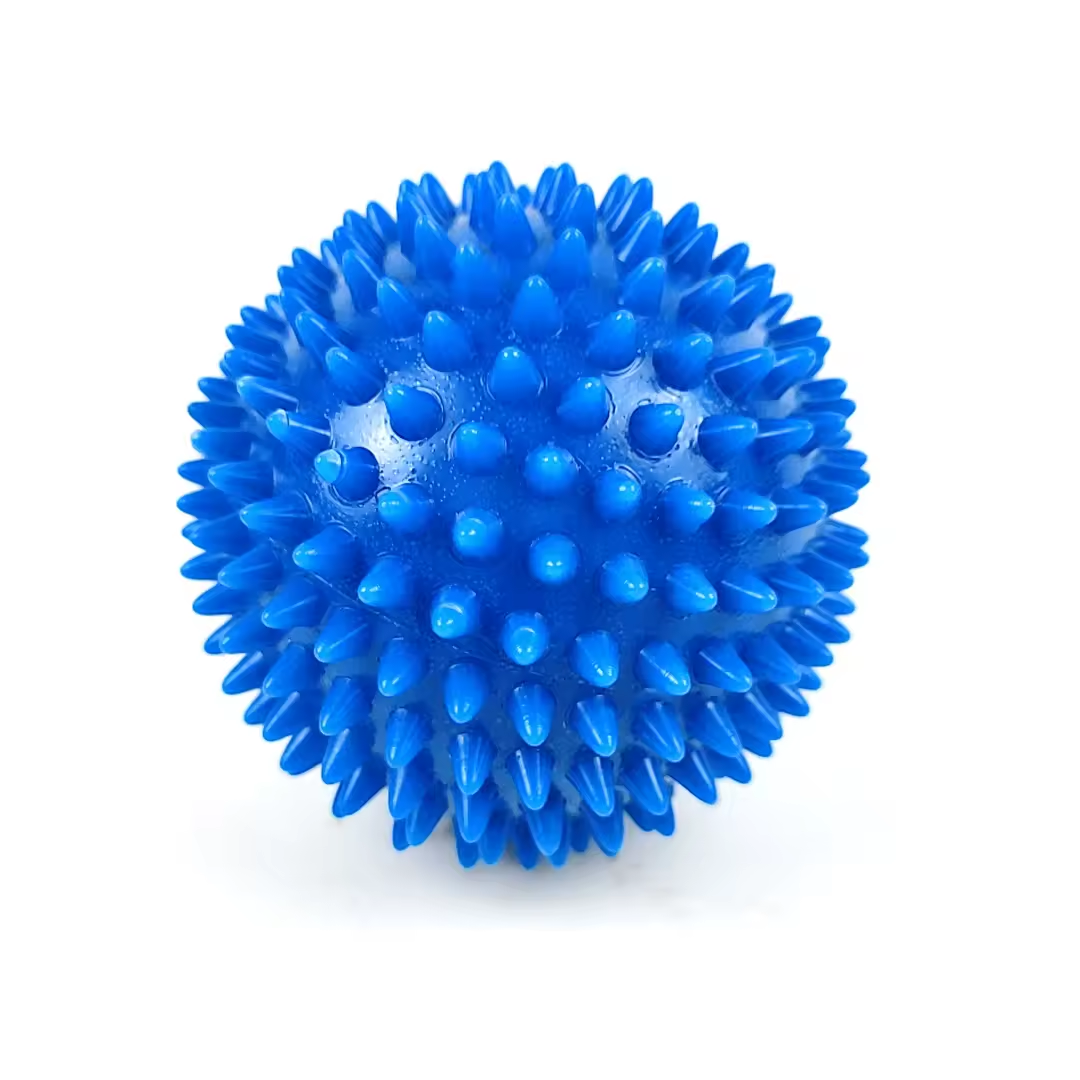
Massage Ball
Best for broad, muscular areas - back, shoulders, glutes, calves and the soles of your feet.
View productStart light
Trap the ball between your body and a wall or the floor, and begin with less pressure than you think you need. Lean in gradually as the tissue warms and softens.
Roll in small circles
Move slowly, an inch or two at a time. Keep to muscle and stay off bone - around the shoulder blade rather than directly on it.
Hold on tender spots
When you find a tight point, stop and hold for 30 to 60 seconds while you breathe into it. Steady pressure is what releases a knot; frantic rolling is not.
A few spots at a time
One to two minutes per area, and only a handful of areas per session. Working everything at once tends to leave you sore the next day.
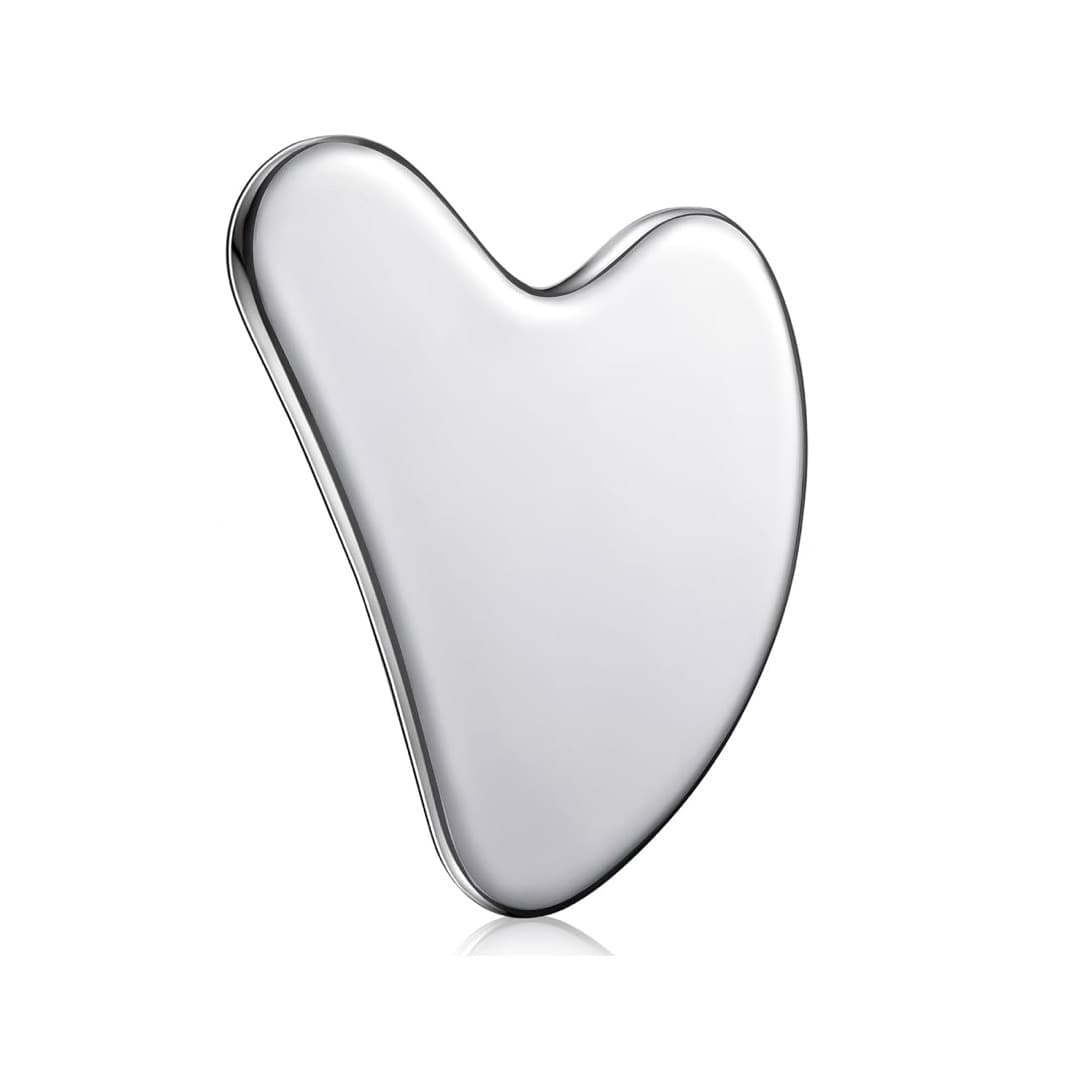
Gua Sha
Traditionally a full-body tool - back, shoulders, arms and legs - and controlled enough for the neck and face.
View productUse oil first
Apply a facial or body oil so the tool glides. Never drag a gua sha across dry skin - the slip is what makes the stroke comfortable.
Keep it almost flat
Hold the edge at a shallow angle to your skin - anywhere from 15 to 45 degrees, and closer to flat is better. Held upright it digs in; held flat it glides.
Stroke in one direction
On the body, work along the muscle in a single direction rather than back and forth. On the face, stroke outward from the centre toward the hairline, then sweep down the side of the neck toward the collarbone, which is where lymph drains.
Repeat lightly
Three to five strokes per area is a good baseline, a few more on larger muscles. Lighter on the face than the back - you are not trying to redden the skin.
Go easy on yourself
Firm pressure should feel like a deep stretch, never sharp pain. Ease off if it does. Avoid working directly over bruises, broken skin, swelling or a recent injury, and skip an area entirely if it is painful at rest. These are everyday wellness tools rather than medical devices - if you are managing an injury or a health condition, check with a healthcare professional first.